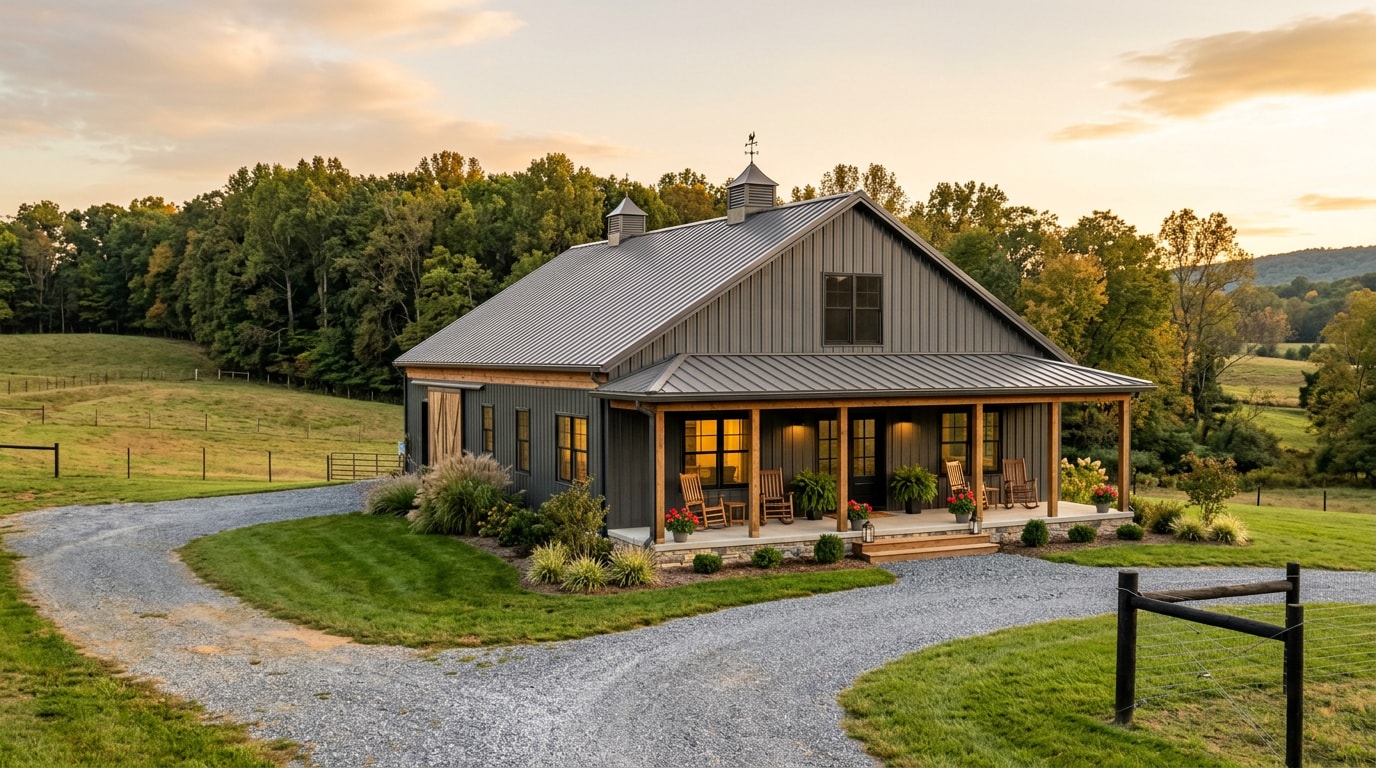
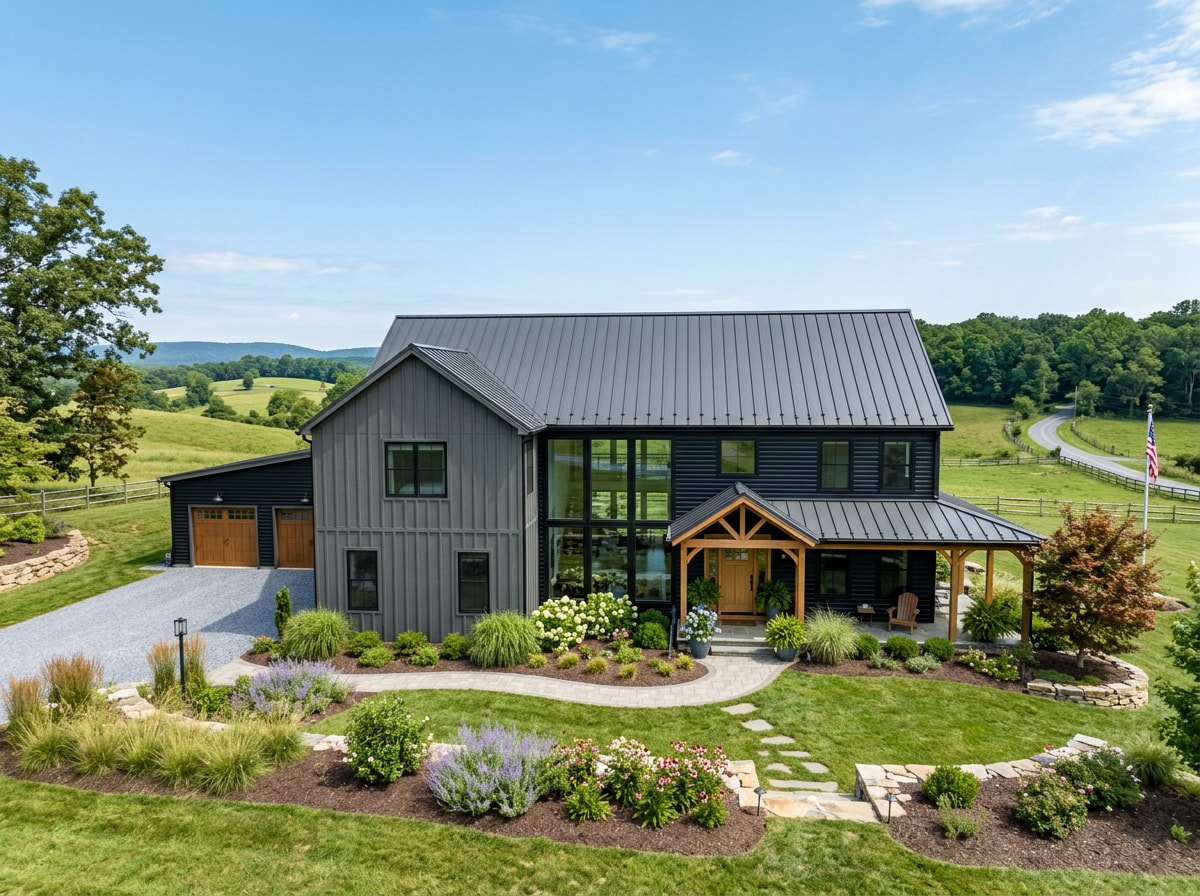
Barndominium builders in Maryland work across two very different landscapes, and the right one understands both. A post-frame specialist near Frederick handles grading and permitting differently than one quoting a flood-prone Eastern Shore lot. This guide walks through 2026 costs, permits, financing, builder vetting, and the interior build-out decisions that turn a metal shell into a livable home.
What Makes Maryland Different
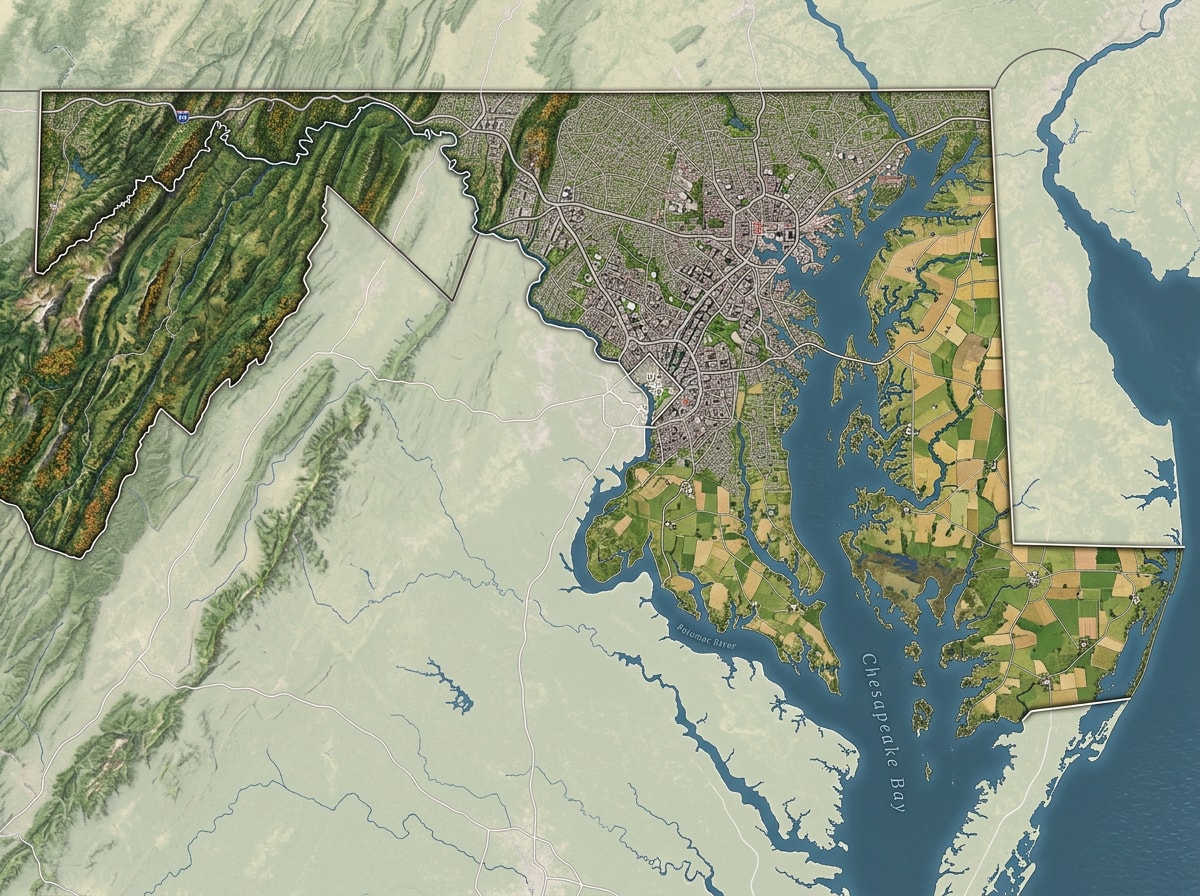
Maryland splits into two distinct building environments, and that split shapes how buyers should evaluate any barndominium builder. The DC-Baltimore corridor brings tighter lots, stricter zoning scrutiny, and higher labor costs. The Eastern Shore and western Maryland offer more acreage and simpler site conditions, but each comes with its own terrain headaches.
| Factor | DC-Baltimore Corridor | Eastern Shore & Western Maryland |
|---|---|---|
| Typical lot size | Small, tightly zoned | Larger, more acreage available |
| Zoning scrutiny | High | Moderate to low |
| Labor cost | Higher | Lower |
| Terrain | Flat, urbanized | Flat/coastal (Shore) or steep Appalachian (West) |
| Common site issues | Setbacks, impervious surface limits | Flood zone review, deep frost footings, septic suitability |
A statewide building code baseline applies everywhere, but each county's building department enforces it with its own local amendments and review timelines. If your site needs grading, drainage work, or a septic layout before the shell goes up, our Site Preparation Contractor Maryland: 2026 Hiring Guide walks through what to check before hiring an excavation crew.
Maryland Barndominium Permits & Building Codes
Maryland does not let individual counties write their own building code from scratch. The state adopts the International Building Code, International Residential Code, and International Energy Conservation Code, as modified by the Department, as the Maryland Building Performance Standards. Local jurisdictions enforce that baseline but may modify the provisions to address conditions peculiar to the local jurisdiction's community.
That means two counties can be on the same code edition and still apply different amendments to things like setbacks, wind load, or energy compliance paths. Maryland law requires each jurisdiction to use the same edition of the same building codes, the IBC, IRC, and IECC, though the state has modified them to coincide with other Maryland laws. You can check the current adopted edition for Maryland directly through the ICC code adoption database before locking in a build timeline.
Beyond the structural permit, expect separate electrical and plumbing permits, and in some counties, zoning board approval before anything is issued, particularly for agricultural-zoned parcels being converted to residential use. If the property sits near tidal water, a Chesapeake Bay Critical Area review adds another layer of site plan scrutiny. The land within 1,000 feet of the Bay's tidal influence was designated "critical" because development there has direct and immediate effects on the health of the Bay.
Rural lots on the Eastern Shore or in western Maryland typically also need a septic and well permit from the county health department, since many aren't connected to public utilities.
Cost of Building a Barndominium in Maryland
Published per-square-foot figures for a Maryland barndominium vary widely, and the gap usually comes down to what's actually included. Some quotes reflect shell cost only. Others reflect a fully finished turnkey build, or a job in a higher-cost DC-corridor county versus a rural Eastern Shore parcel.
The table below is a planning range, not a quote. Treat it as a starting point for conversations with builders, not a guarantee.
| Component | Estimated Cost (per sq ft) |
|---|---|
| Foundation & site work | $8-$18 |
| Post-frame shell & roofing | $25-$45 |
| Insulation & vapor barrier | $4-$9 |
| Mechanical (HVAC, electrical, plumbing rough-in) | $20-$35 |
| Interior finish (drywall, flooring, fixtures) | $35-$70 |
| Septic & well installation | $8-$20 |
| Shell-only subtotal | $40-$70 |
| Turnkey total | $100-$245+ |
Labor costs run noticeably higher in Montgomery, Howard, and Anne Arundel counties than in rural Eastern Shore counties, where contractor overhead and permit fees tend to be lower. Always confirm whether a quoted number reflects the shell alone or a full turnkey total including finishes before comparing bids side by side.

How to Vet a Barndominium Builder in Maryland
A true post-frame specialist isn't the same as a general contractor who occasionally takes on a metal-building project. Barndominium construction blends pole-barn engineering with residential finishing, and that combination requires experience most general contractors haven't built up.
Confirm Licensing Before Anything Else
The Maryland Department of Labor urges citizens to contact the state to verify licensure status of contractors before hiring them, whether the work involves repairs or a complete home build.
Maryland requires home improvement contractors to register with the Maryland Home Improvement Commission (MHIC), which operates under the Department of Labor. You can run that check yourself through the MHIC license verification portal in a few minutes.
A business that isn't properly licensed and insured shouldn't make the shortlist, regardless of its star rating or portfolio photos.
Read Reviews for Specifics, Not Stars
Once licensing checks out, read past reviews looking for details. Did the reviewer complete an actual barndominium, or just a pole barn or garage? Ask any contractor you're serious about for two or three references tied to comparable barndominium projects, not just agricultural outbuildings.
Look for Post-Frame Experience
When vetting a builder, prioritize:
- A documented history of post-frame or metal-building residential projects
- Familiarity with your specific county's permitting process
- A willingness to put references in writing, not just verbally
- Engineering stamps on file for wind and snow load in your zone
A contractor who's already pulled permits in your county will move faster than one learning the process from scratch.
Barndominium Financing in Maryland
Conventional mortgage lenders often struggle to classify a barndominium, since appraisers may lack comparable sales to reference in some submarkets. That gap pushes many buyers toward ag lenders, farm credit associations, and construction loan specialists accustomed to financing non-traditional residential structures on rural land.
This is where the picture is better than most buyers expect. Some rural-focused lenders finance most barndo construction the same way they finance a conventional-style home, without charging a higher rate or requiring a larger down payment for a post-frame build. That's a meaningful counterpoint to the assumption that barndominiums are always harder to finance than stick-built homes.
A land-and-construction loan that converts to a standard mortgage once the home is finished is a common path. Some buyers also qualify for USDA financing if the property falls within an eligible rural area. The USDA's Section 502 Direct Loan Program assists low- and very-low-income applicants in obtaining decent, safe, and sanitary housing in eligible rural areas by providing payment assistance. Check current eligibility through USDA Rural Development's Maryland housing programs before assuming your parcel does or doesn't qualify.
Shopping two or three lenders before committing is worth the extra week it takes.
Barndominium Insurance in Maryland
Barndominium insurance is generally available anywhere traditional homeowners insurance is sold, though not every carrier prices it the same way. Lenders usually require proof of insurance when financing a barndominium, whether through a construction loan, construction-to-permanent loan, or standard mortgage.
Some insurers have less experience valuing a hybrid metal-and-residential structure, which can lead to extra underwriting questions or lowball replacement-cost estimates. Keeping detailed build records, engineering stamps, material invoices, and photos at each construction stage, makes it easier for an insurer to accurately value the finished home. A builder's risk policy during construction is also worth confirming before the first delivery truck arrives on site.
From Shell to Showpiece: Why Interior Finish-Out Decides the Outcome
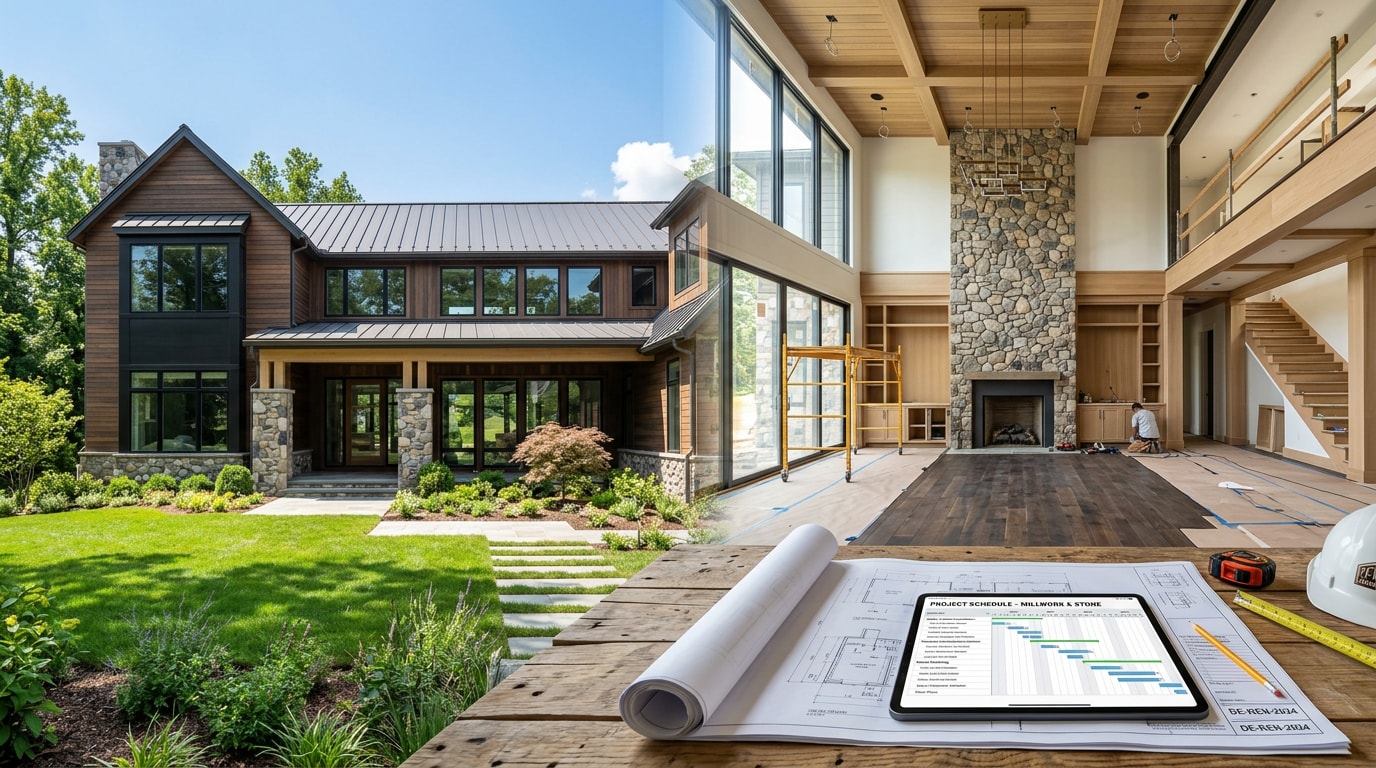
Here's what most barndominium guides skip: the shell is the easy part. A post-frame crew can dry in a Maryland barndominium in a matter of weeks. What separates a home that feels like a converted barn from one that feels like a custom residence is the interior build-out, and that's where most general post-frame builders run out of depth.
We finish out barndominium and post-frame interiors across Maryland, Washington D.C., Virginia, and Delaware, taking shells from framed-and-dried-in to fully livable. The upgrades that make the biggest difference in a wide-open barndominium floor plan include:
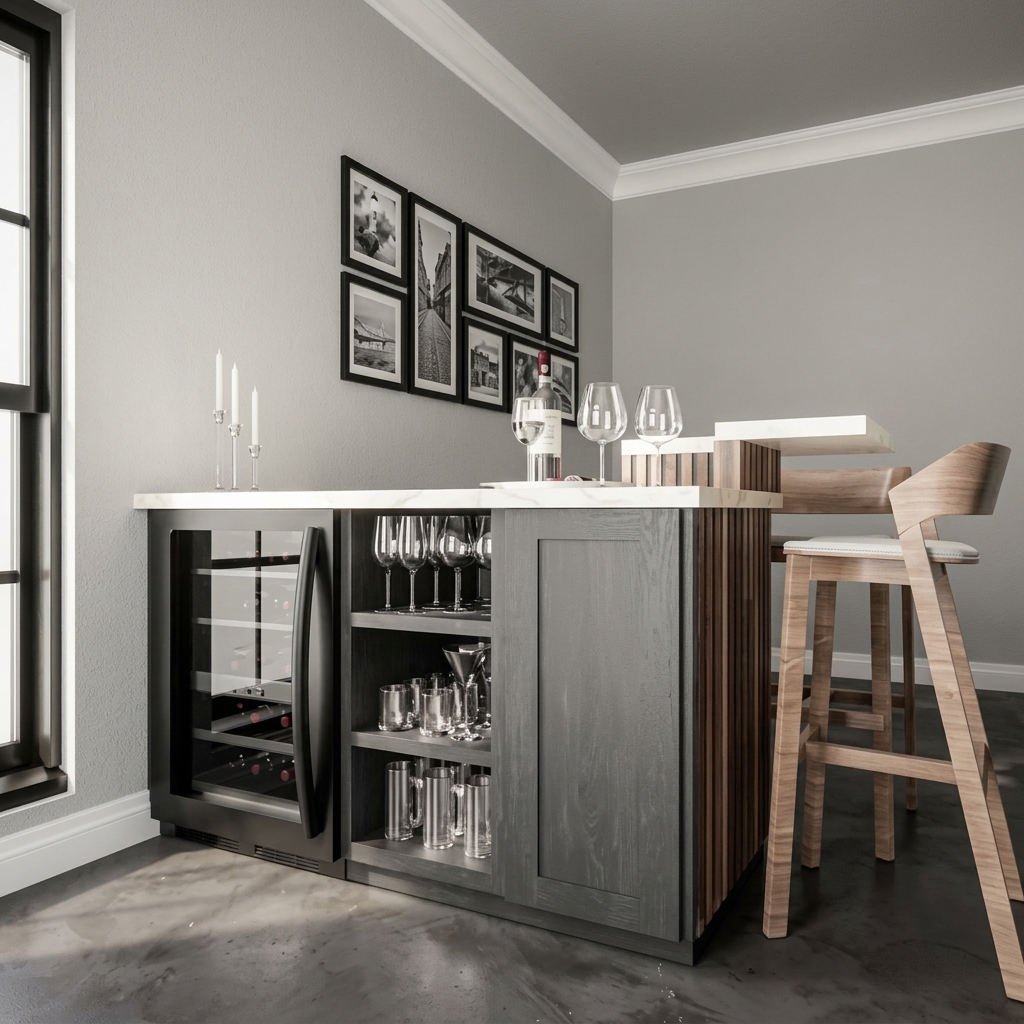
- Custom luxury wine cellars built into unused basement or mezzanine space
- Upscale bar design and build for open-concept great rooms
- Custom saunas tucked into a corner of the shop or utility wing
- Luxury basement renovations if your plan includes a finished lower level
- Kitchen cabinet design and build sized for an open-span layout
- Bathroom design and build that doesn't feel like an afterthought
- Furniture-grade millwork to soften exposed steel and timber framing
- Flooring installation and slab stone design for surfaces that hold up to barn-style traffic
Browse the full range in our Signature Spaces and Surfaces and Finishes collections, or see general remodeling scope under high-end remodeling.
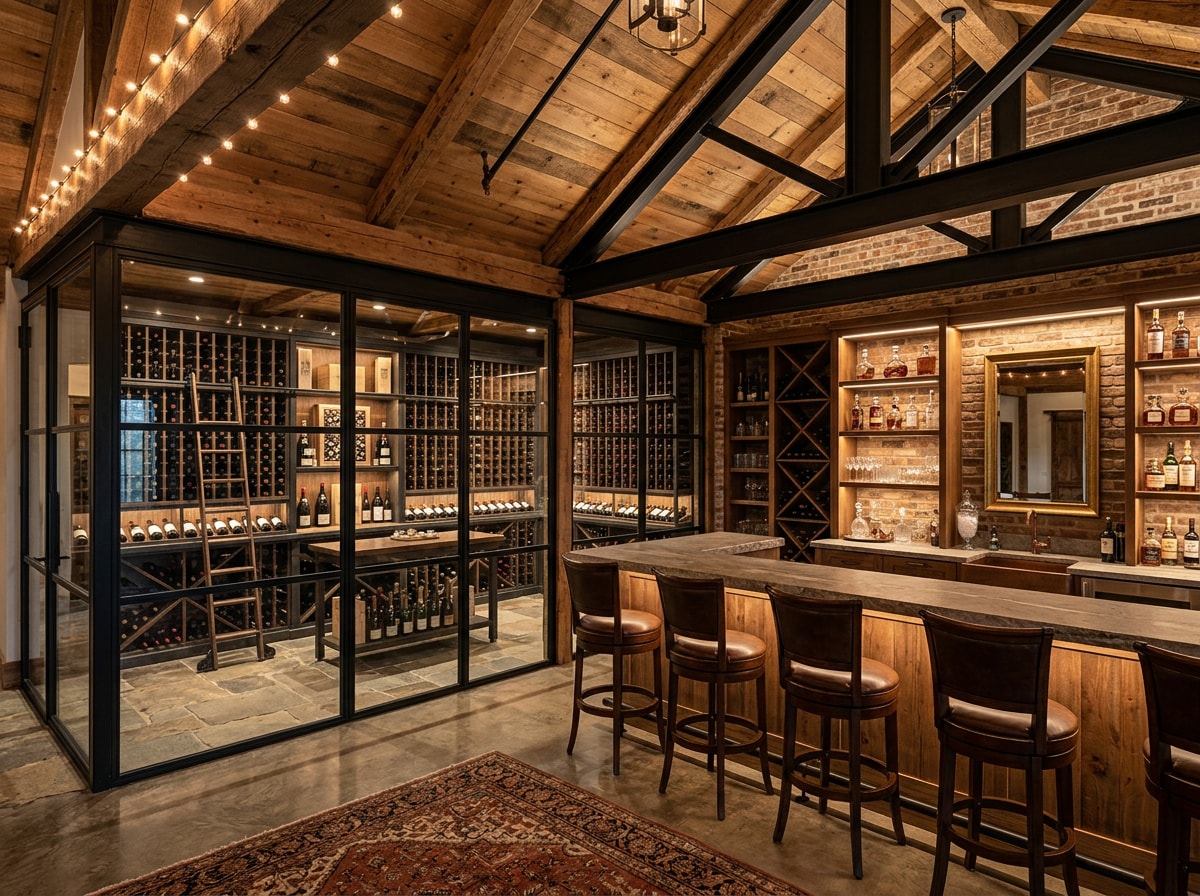
If you already have a shell under contract or framed, start your cellar project now so the finish-out timeline overlaps with your builder's rough-in schedule instead of trailing behind it. We coordinate directly with post-frame builders across Maryland, so the mechanical rough-in and the custom finish work land in the right order.
Barndominium Kit Providers in Maryland
A barndominium kit typically covers the steel building kit and structural shell only, framing, roofing panels, and sometimes windows and doors, while a turnkey barndominium includes full interior finishing and mechanical systems from the same company.
Before ordering any engineered kit, confirm it carries a stamped engineering certification showing it meets Maryland's wind and snow load requirements, and ask about delivery logistics to rural sites. If you're weighing a kit shell against a fully custom build, our custom home general contractor guide for Virginia covers similar shell-versus-custom tradeoffs that apply across the DMV region.
FAQ
Can You Build a Barndominium in Maryland?
Yes. A barndominium build is allowed statewide, enforced through county and city building departments that require a permit, engineered drawings, and inspections. Rural land for these builds is generally easier to find on the Eastern Shore and in western Maryland than near DC or Baltimore, where lots are scarcer and pricier.
What Is the Chesapeake Bay Critical Area?
The Chesapeake Bay Critical Area Protection Program, enacted in 1984, designated a geographical area around the Bay's tidal waters as "critical" because land within 1,000 feet of the tidal influence has direct and immediate effects on the Bay's health. Buyers eyeing waterfront or near-waterfront Eastern Shore parcels should confirm Critical Area status with the county before finalizing plans.
Are There Builders Who Specialize in Barndominiums in Maryland?
Yes. A number of Maryland contractors specialize specifically in barndominium construction, while other general contractors have only occasional experience with the style. Comparing a few builders side by side, checking licensing, portfolio, and post-frame experience, is the fastest way to find the right fit.
How Long Does It Take to Build a Barndominium in Maryland?
The post-frame shell itself can go up in a matter of weeks once permits clear. Permitting, site work, and interior finish-out add the real time. Most full builds, from permit application to move-in, run six to twelve months depending on county review timelines and how custom the interior is.
Can You Get a Conventional Mortgage for a Barndominium in Maryland?
Sometimes, but not always on the first try. Appraisers in areas with few barndominium comparables may struggle to value the structure. Ag lenders and construction-loan specialists often step in where conventional underwriting stalls, and some finance barndo builds on terms close to a standard mortgage.
Do Barndominiums Hold Their Resale Value in Maryland?
Resale value depends heavily on location, build quality, and local demand, so buyers should research the market thoroughly before purchasing. Rural counties with an established base of barndominium sales tend to hold value better than submarkets close to DC or Baltimore, where comparables are still scarce.
What Are Potential Drawbacks to Owning a Barndominium in Maryland?
The upfront investment remains significant even though a barndominium is typically cheaper than a traditional home of similar size. Maryland's humid summers and cold winters demand proper insulation, and insurance can require extra underwriting since some carriers remain unfamiliar with valuing these structures. For a closer look at the full home-build picture beyond zoning and permits, our Construction Project Management Services Delaware homeowners trust in 2026 breaks down how project oversight changes outcomes on custom builds in this region.