
Residential framing contractors in Delaware set the structural skeleton your entire home depends on, yet the hiring process gets less scrutiny than picking a countertop. A framing mistake does not show up as a cosmetic flaw. It shows up as a sagging floor, a cracked wall, or a roof load that was never engineered to carry what sits on it. This guide walks through licensing rules, 2026 cost benchmarks, and the vetting steps that actually separate a solid framing crew from a well-marketed one.
Does Delaware Require a License for Framing Contractors?
Delaware does not run a statewide trade exam for general contractors or framers the way it does for electricians and plumbers. What the state does require is business registration.
Delaware requires any person or entity conducting a trade or business in the state to obtain a business license from the Delaware Division of Revenue. That license is a tax and legal-operation formality, not a skills test. This is in addition to any city and/or county business license requirements, depending on the business' location in Delaware.
You can confirm a framing company's active status using the Delaware Division of Revenue's business license search tool. It takes less than a minute and should be a non-negotiable step before any contract gets signed.
Because the registration bar is low, a clean website and a stack of five-star reviews tell you nothing about whether a crew can actually hang a square wall. Insurance proof and a workmanship warranty carry more weight than registration alone. Verify general liability and workers' comp coverage directly with the carrier, not just from a certificate the contractor hands you.
How Much Does Framing Cost in Delaware in 2026?
Framing is consistently the single most expensive structural stage of building a home, and the national data backs that up directly. Framing makes up 11.6% of the total cost, or $49,763, which is the highest line item on any construction expenses breakdown.
In total, framing can be over $70,000, or 16.6% of the total building funds.
That figure is lower than it was two years earlier. The framing category saw the largest percentage-point decrease from 2022 to 2024, falling from 20.5% to 16.6% , which tracks with lumber prices cooling off from their pandemic-era highs. That is useful context most local framing pages do not mention: if a Delaware crew quotes you a number that still reflects 2022 lumber pricing, you are likely overpaying.
These are national averages from the National Association of Home Builders' most recent construction cost survey, not Delaware-specific numbers, so treat them as a sanity check rather than a final quote. Get at least three local bids and ask each contractor to break out labor versus material costs separately.
| Cost driver | What it affects |
|---|---|
| Lumber/steel pricing at time of bid | Can swing a quote 10 to 20 percent within a single season |
| Crew size and experience | Smaller crews often mean slower timelines, not lower quality |
| Framing complexity | Rooflines, dormers, and large spans add engineered lumber and labor hours |
| Material grade | Treated lumber, engineered beams, and steel reinforcement cost more upfront but reduce callback risk |
How to Vet a Residential Framing Contractor
A quote that comes in noticeably lower than two or three other bids for the same scope is a flag, not a win. Ask what is different before you sign. Thinner crews, lower-grade lumber, or skipped structural details are the usual explanations, and none of them are good news once walls are closed up.
Before hiring, confirm the following:
- Active Delaware business registration and, if required, local county or municipal licensing
- Proof of general liability insurance and workers' compensation, verified with the carrier directly
- A written workmanship warranty covering structural framing defects
- At least two comparable bids for the same scope of work
- Photos or references from completed residential framing jobs similar in size to yours
- A clear payment schedule tied to framing milestones, not a single lump sum
Our team at {{SITE_URL}} works alongside framing crews across Delaware, Maryland, Virginia, and Washington, D.C. on additions and renovations that depend on a structurally sound shell before any finish work begins. We have seen projects stall for weeks because a framing subcontractor underbid the job and then couldn't staff it. Getting the framing scope right the first time protects every phase that comes after it, including the custom millwork, cabinetry, and surfaces most homeowners actually care about.
Residential Framing Services, Explained
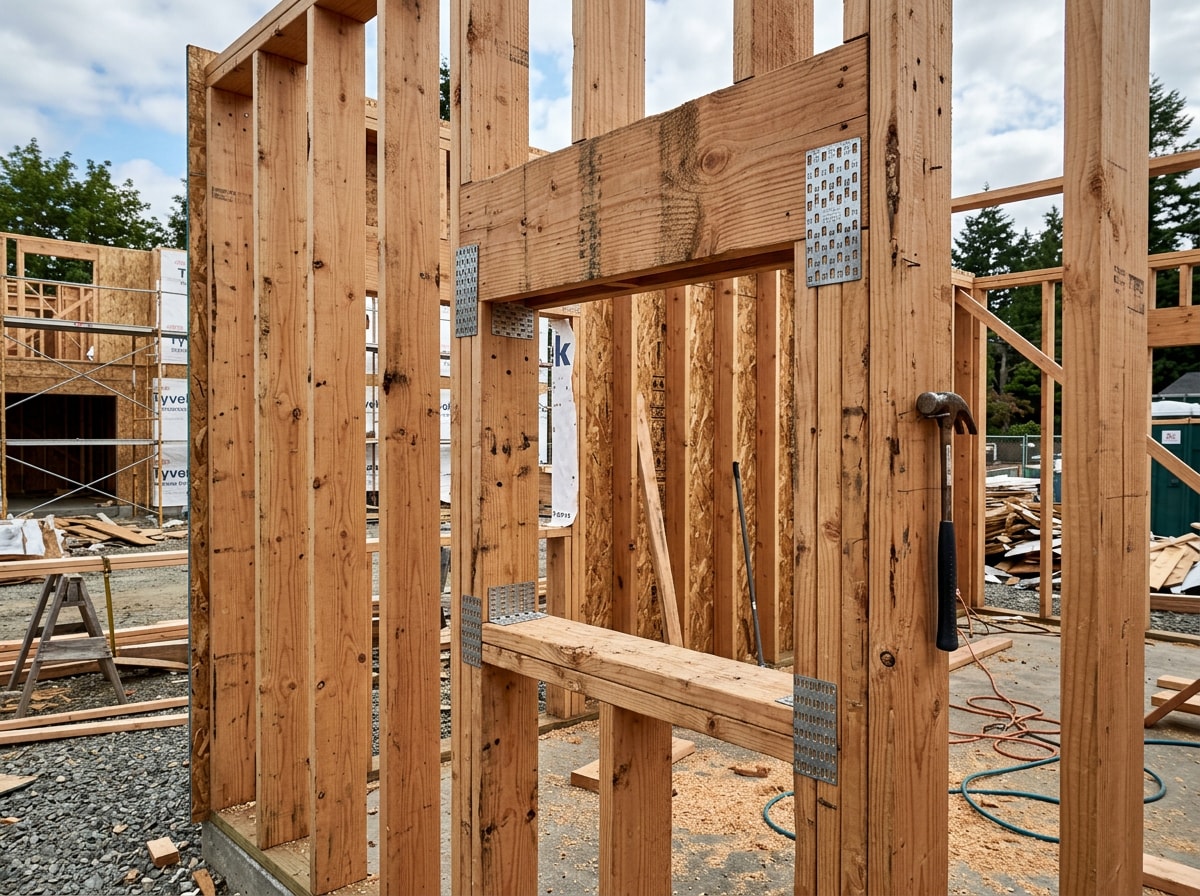
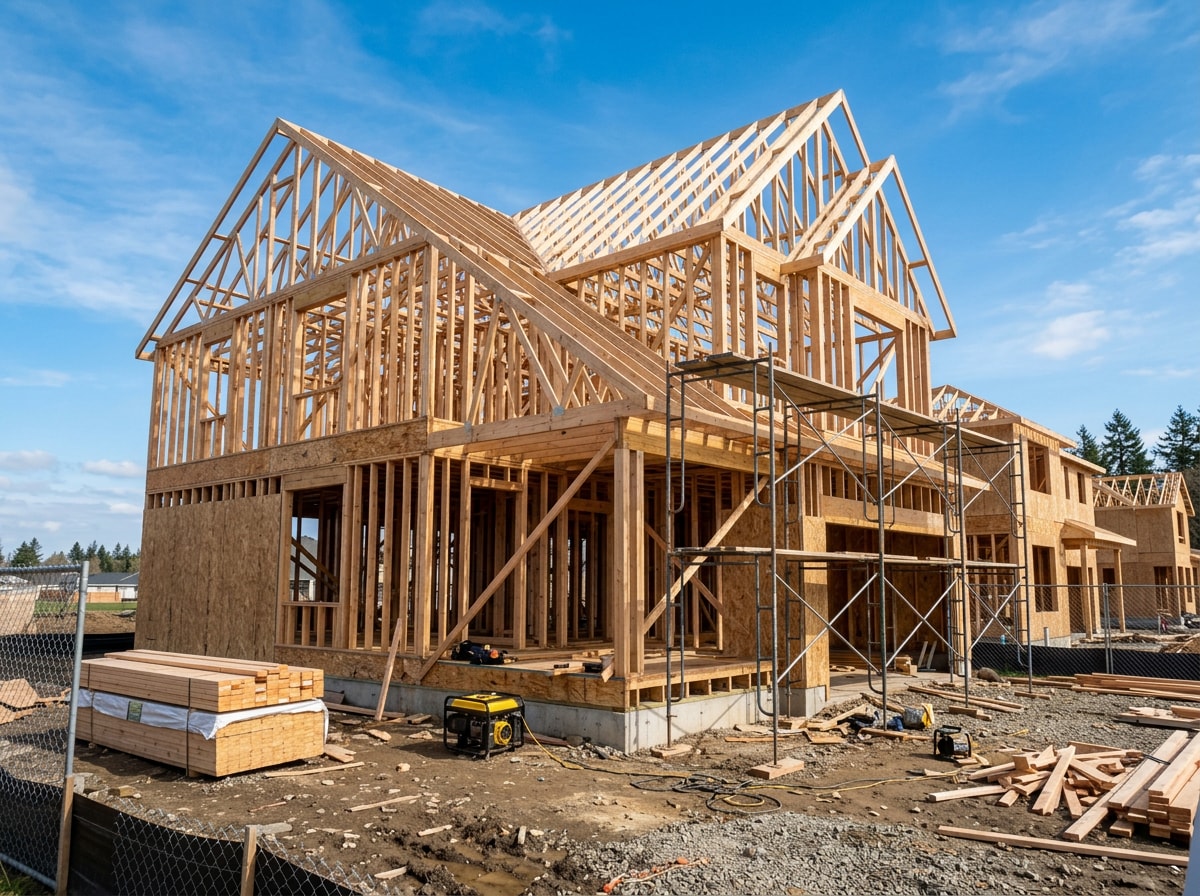
Residential framing covers the full structural shell of a home: wall studs, floor joists, roof trusses, and the rough openings for windows and doors. Delaware crews typically work in both wood framing and metal framing, choosing materials based on the project's design, budget, and load requirements.
Most established residential framing services handle new home construction, home addition framing, and remodel work under one roof. That range matters if your project changes scope midstream, such as a simple addition that grows into a larger renovation once the walls are open.
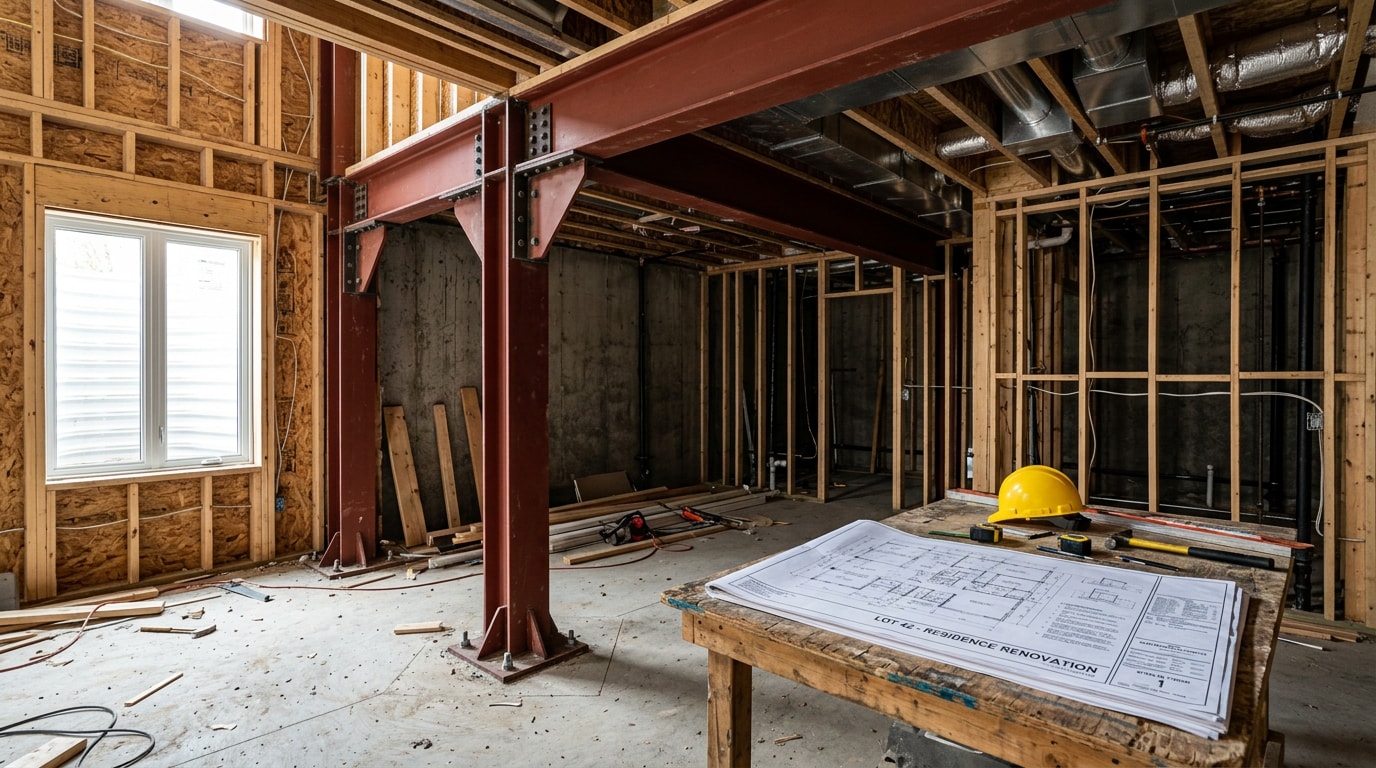
If your framing project is tied to a larger renovation like a basement build-out, a home addition, or a full-gut remodel, the framing scope needs to be coordinated with the finish trades from day one. Our Luxury Basement Renovations and High-End Remodeling teams start every project with a structural review for exactly this reason.
Wood vs. Heavy-Gauge Steel Framing for Delaware Homes
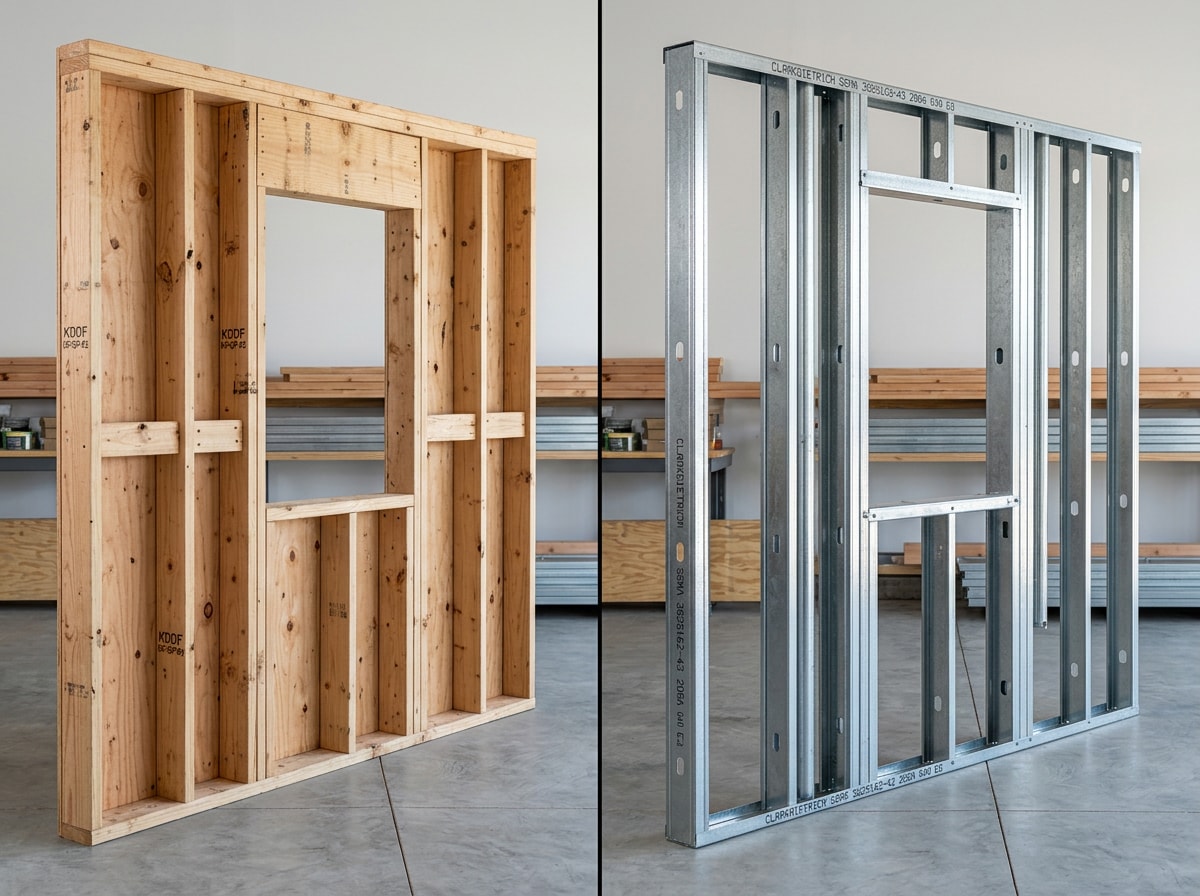
Wood is still the default for most single-family framing in Delaware. Heavy-gauge steel shows up more often in load-bearing walls, additions carrying extra weight, and multi-story builds where wood alone may not meet the structural demand.
| Factor | Wood Framing | Heavy-Gauge Steel |
|---|---|---|
| Upfront cost | Generally lower per square foot | Higher material and labor cost |
| Pest/rot resistance | Vulnerable to termites and moisture | Resistant to termites and warping |
| Install speed | Faster for crews experienced with wood | Slower, requires specialized fastening |
| Best fit | Standard single-family homes | Load-bearing additions, coastal humidity exposure |
Delaware's humid coastal climate is a real factor in that decision, particularly for beach-area builds where moisture exposure is constant. If your contractor proposes steel for part of the build, the technical specifications worth knowing come from the American Iron and Steel Institute's cold-formed steel framing standards, which govern how structural steel framing members are designed and installed in residential applications. The North American Standard for Cold-Formed Steel Framing, Product Data (AISI S201), provides criteria for standardized products, AISI S202 serves as the industry code of standard practice, and AISI S230 provides a prescriptive method for one- and two-family dwellings.
Residential vs. Commercial Framing Contractors
Not every framing crew that works on apartment buildings or retail spaces is the right fit for a single-family home, and the reverse is also true.
Commercial Framing Contractors
Commercial framing contractors typically work on multi-unit projects, apartment complexes, and office buildings, using heavier-duty materials and larger crews to meet commercial code requirements. That scope differs significantly from single-family residential work in timeline, inspection process, and crew structure. A crew built for commercial-scale work may not be set up for the smaller, more flexible scheduling a single-family homeowner needs.
Residential construction is addressed in specific OSHA standards for recordkeeping, general industry, and construction. Jobsite safety requirements apply regardless of project size, so it is worth confirming any framing crew, residential or commercial, follows OSHA's residential construction safety standards before work begins.
Mixed-Use Residential Framing
Mixed-use residential framing refers to buildings that combine residential units with ground-floor commercial space, like apartments above retail storefronts. It is a smaller niche that most Delaware homeowners planning a single-family build or addition will not need to think about.
Why Hire a Professional Framing Contractor
Being licensed, registered, and insured is the baseline, not a bonus feature. Beyond that, look for a framing warranty covering workmanship defects and a contractor willing to walk your site in person before quoting a price.
Tie this back to the registration-versus-skill distinction covered earlier: a business can be legally registered in Delaware without ever having passed a trade-specific skills exam. That is exactly why warranty terms, insurance proof, and comparable bids carry real weight when you are choosing who frames your home.
If you are planning a larger renovation project where framing is just the first step, our guide on BIM structural services in Delaware covers how structural modeling helps renovations, additions, and commercial builds avoid framing surprises before construction even starts. For homeowners researching other regional build types, our barndominium builders guide for the Washington, D.C. area is also worth a look.
Check our Delaware service area page to confirm coverage near you, or browse our Signature Spaces and Surfaces and Finishes categories to see how framing decisions connect to the finish work that follows. Ready to talk through your project? Start Your Cellar Project and we'll walk you through how framing, structure, and finish work fit together from the first planning call.
FAQ
How do I hire a framing contractor in Delaware?
Start by verifying active business registration through the Delaware Division of Revenue and confirming insurance coverage directly with the carrier. Review photos of past framing projects similar in scale to yours, then get at least two or three bids for the same scope of work. Comparing quotes side by side is the fastest way to catch a crew that's underbidding or understaffed.
How much does it cost to frame a house in 2026?
Nationally, framing runs about 16.6% of total construction cost, making it the single largest line item in a typical home build. That share has actually dropped from 20.5% in 2022 as lumber prices cooled. Delaware quotes will vary with local material costs and crew availability, so treat national averages as a benchmark and get current local bids rather than relying on last year's pricing.
Does Delaware require a contractor license for framing?
No. Delaware does not require a state-level general contractor license for framing work. Local jurisdictions in New Castle, Kent, and Sussex counties may have their own registration or permitting rules, so checking city or county requirements is part of the hiring process. Trades like electrical, plumbing, and HVAC do require state-level licensing, but framing contractor registration in Delaware is handled at the business-license level alongside active insurance verification.
What's the difference between wood and steel framing?
Wood framing is generally cheaper and faster to install, which is why it's the default for most single-family homes. Steel framing costs more upfront but resists termites, warping, and moisture damage better, which matters in Delaware's humid coastal areas. The choice usually comes down to budget, project scale, and whether a wall is load-bearing.
What questions should I ask a framing contractor before signing?
Ask about the expected timeline, where lumber or steel materials are sourced from, whether any work will be subcontracted out, and what the payment schedule looks like. These questions surface mismatches early, before a deposit changes hands. A contractor who answers clearly and in detail is a better sign than one who gives vague timelines.